Featured Updates
Current Picks
Recommended Updates
Tech

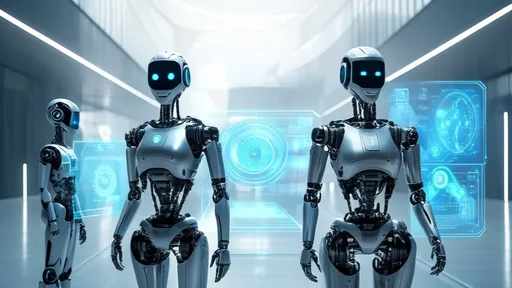
Humanoid Robots: The Disruptive Product Integrating Multiple Advanced Technologies

By / Sep 12, 2025

Humanoid robots represent one of the most groundbreaking technological achievements of the 21st century, embodying the convergence of artificial intelligence, advanced mechanics, and sensory integration. These machines are no longer confined to the realms of science fiction but are rapidly becoming tangible products poised to reshape industries and redefine human-machine interaction. With capabilities that mirror human motion, cognition, and adaptability, humanoid robots stand at the forefront of a new era in automation and robotics.
IT

Assessing the Autonomous Task Completion Capability of AI Agents

By / Aug 26, 2025

As artificial intelligence continues to evolve at a breakneck pace, the emergence of AI agents capable of autonomous task completion represents one of the most significant leaps forward. These are not mere chatbots responding to prompts; they are sophisticated systems designed to perceive their environment, make decisions, and execute complex sequences of actions to achieve a defined goal with minimal human intervention. This shift from tools that assist to entities that act is redefining the boundaries of automation and intelligence.
IT

The Technological Infrastructure of Next-Generation Internet (Web3) and Critical Thinking

By / Aug 26, 2025

The digital landscape stands on the precipice of a profound transformation, heralded by the emergence of Web3. This next iteration of the internet promises a fundamental shift from the centralized architectures that dominate our current online experiences, known as Web2, towards a decentralized, user-sovereign paradigm. The conversation surrounding Web3 is a complex tapestry, interwoven with groundbreaking technological potential, ambitious philosophical ideals, and a healthy dose of pragmatic skepticism. It is not merely an upgrade but a complete re-imagining of the internet's very foundations.
IT

Exploring Technical Solutions for the Management and Inheritance of Personal Digital Legacies

By / Aug 26, 2025

As our lives become increasingly digitized, a new category of assets has emerged that challenges traditional concepts of inheritance and legacy management. Digital assets—from social media accounts and email correspondence to cryptocurrency holdings and cloud-stored photographs—represent not just financial value but profound emotional and historical significance. The management and inheritance of these digital possessions has become one of the most pressing yet overlooked aspects of modern estate planning.
IT

Global IT Talent Mobility Trends and the Impact of Remote Work Visa Policies

By / Aug 26, 2025

The global landscape of IT talent mobility is undergoing a profound transformation, driven by a confluence of technological advancements, shifting corporate strategies, and evolving immigration policies. For decades, the movement of skilled technology professionals followed a predictable pattern, characterized by a unidirectional flow from developing nations to established tech hubs in North America and Europe. This paradigm, however, is being dismantled. The catalyst for this disruption is not merely a change in economic conditions but a fundamental reimagining of the very nature of work itself, accelerated to breakneck speed by the global pandemic.
IT

Analysis of Talent Competition Strategies between Tech Giants and Startups

By / Aug 26, 2025

In the ever-evolving landscape of the technology sector, the battle for top talent between industry behemoths and agile startups has intensified to unprecedented levels. This fierce competition is reshaping hiring practices, compensation structures, and workplace cultures across the global tech ecosystem. While tech giants boast immense resources and stability, startups counter with innovation potential and equity opportunities, creating a dynamic tug-of-war for the world's brightest minds.
IT

First Principles" of Technology Selection for Startups

By / Aug 26, 2025

In the fast-paced world of tech startups, the allure of shiny new technologies often overshadows foundational decision-making principles. Founders and CTOs face immense pressure to adopt trending frameworks, languages, or platforms, driven by industry buzz or investor expectations. Yet, those who build enduring companies understand that technology choices must stem from first principles—a rigorous process of breaking down problems to their core truths and building solutions from the ground up. This approach transcends mere tool selection; it embodies a philosophy of aligning every technical decision with the fundamental needs of the business, its customers, and its long-term vision.
IT

The Modernization Transformation of Technical Writing: From Manuals to Interactive Documentation

By / Aug 26, 2025

Technical documentation has undergone a profound transformation in recent years, moving far beyond the traditional printed manuals that once dominated the field. The evolution from static, linear documents to dynamic, interactive resources represents not just a change in format, but a fundamental shift in how information is structured, delivered, and consumed. This transition reflects broader changes in technology, user expectations, and the very nature of how we interact with complex systems and products.
IT

Building a Remote-First Company's Technology Stack and Culture

By / Aug 26, 2025

In the evolving landscape of modern work, Remote-First companies have emerged as pioneers, reshaping not only where we work but how we build and sustain organizational culture and technical infrastructure. Unlike traditional remote-friendly or hybrid models, a Remote-First approach fundamentally designs all processes, communication, and tools with distributed teams as the default. This philosophy demands a deliberate and thoughtful construction of both culture and technology stack to ensure cohesion, productivity, and inclusivity across geographies and time zones.
IT

How to Measure the Value and Return on Investment of Developer Relations (DevRel)?

By / Aug 26, 2025

In the ever-evolving landscape of technology, Developer Relations (DevRel) has emerged as a critical function for companies aiming to build and nurture communities around their products. Yet, despite its growing importance, many organizations struggle to quantify the value and return on investment (ROI) of their DevRel initiatives. Unlike traditional sales or marketing metrics, which often focus on immediate conversions or revenue, the impact of DevRel is multifaceted, long-term, and deeply intertwined with community engagement, product adoption, and brand loyalty. This complexity makes measuring its success both challenging and essential for justifying continued investment and strategic alignment.
IT

The Technological Implementation Pathway for Technology Companies' ESG Strategies

By / Aug 26, 2025

As global sustainability concerns intensify, technology companies are increasingly under scrutiny to demonstrate robust Environmental, Social, and Governance (ESG) commitments. While many firms have publicly declared ambitious goals, the real challenge lies in the technical execution and integration of these strategies into core business operations. The journey from pledge to practice involves a complex interplay of innovation, infrastructure overhaul, data integrity, and cultural transformation within organizations.
IT

Chief Artificial Intelligence Officer (CAIO) Role Positioning and Core Responsibilities

By / Aug 26, 2025

The emergence of the Chief Artificial Intelligence Officer (CAIO) represents one of the most significant shifts in modern corporate leadership structures. As organizations increasingly recognize AI not merely as a technological tool but as a core driver of business strategy, innovation, and ethical responsibility, the need for a dedicated C-suite leader has become undeniable. This role transcends the traditional boundaries of a Chief Information Officer or Chief Technology Officer, focusing specifically on harnessing the transformative potential of AI while navigating its complex challenges. The CAIO is positioned at the intersection of technology, business, ethics, and governance, serving as the architect of an organization's AI-powered future.
IT

A Beginner's Guide to Spatial Computing for Developers

By / Aug 26, 2025

As the digital and physical worlds continue their inexorable convergence, spatial computing emerges not merely as another technological trend but as a fundamental shift in how we interact with information and our environment. For developers, this represents a new frontier, a vast and largely uncharted territory brimming with potential. The journey from traditional screen-bound development to creating immersive, context-aware experiences is both daunting and exhilarating. This guide aims to serve as your compass, providing a foundational understanding and a clear path to begin building within this expansive domain.
IT

The Battle for Interoperability Standards in the Metaverse

By / Aug 26, 2025

The digital landscape is currently witnessing one of its most significant and complex battles, a conflict not over territory or resources in the traditional sense, but over the very protocols that will govern our future virtual existence. At the heart of this struggle lies the concept of the Metaverse and the critical issue of interoperability. Unlike the early, walled-garden days of the internet, the vision for a true Metaverse hinges on the ability for users, their digital assets, and experiences to flow seamlessly between different virtual platforms and worlds. This ideal, however, is far from a guaranteed reality, as a fierce standards war is unfolding among tech titans, open-source consortiums, and blockchain pioneers, each vying to establish their framework as the foundational language of the next digital frontier.
IT

Exploring the Rights and Ethical Boundaries of Digital Twins

By / Aug 26, 2025

The concept of the digital twin has rapidly evolved from a niche engineering tool to a transformative technology with applications spanning healthcare, urban planning, manufacturing, and personal data analytics. A digital twin is a dynamic, virtual representation of a physical object, system, or process, continuously updated with data from its real-world counterpart. This allows for simulation, analysis, and control, offering unprecedented opportunities for optimization and innovation. However, as these digital replicas grow in complexity and fidelity, often mirroring human beings or entire social systems, they venture into a legal and ethical grey area. The very capabilities that make them powerful—their depth of detail and real-time connectivity—also raise profound questions about rights, ownership, consent, and the moral boundaries of creating and manipulating a virtual 'other'.
IT

Advancements in Brain-Computer Interface (BCI) Technology: Invasive vs. Non-Invasive Approaches

By / Aug 26, 2025

In the rapidly evolving landscape of neurotechnology, brain-computer interfaces (BCIs) have emerged as one of the most transformative innovations of the 21st century. These systems, which facilitate direct communication between the human brain and external devices, are advancing along two primary technological pathways: invasive and non-invasive approaches. Each route presents distinct advantages, challenges, and applications, collectively pushing the boundaries of what is possible in medicine, communication, and human augmentation.
IT

AI Ethics Toolbox: Fairness, Explainability, and Accountability in Practice

By / Aug 26, 2025

The rapid proliferation of artificial intelligence across industries has brought with it a pressing need for robust ethical frameworks. As organizations increasingly deploy AI systems to make critical decisions—from loan approvals to medical diagnoses—the conversation has shifted from mere technical feasibility to moral responsibility. In response to this paradigm shift, a new conceptual tool has emerged: the AI Ethics Toolkit, a multifaceted approach designed to embed fairness, explainability, and accountability directly into the lifecycle of AI systems.
IT

Technological Singularity: Explorations in Futurology and Ethical Considerations"

By / Aug 26, 2025

The concept of the Technological Singularity has long captivated futurists, scientists, and philosophers alike. It represents a hypothetical future point where technological growth becomes uncontrollable and irreversible, resulting in unforeseeable changes to human civilization. This idea, often associated with the emergence of superintelligent artificial intelligence, suggests a moment beyond which the future becomes fundamentally unpredictable. The discourse surrounding the singularity is not merely a technical forecast; it is imbued with profound ethical, social, and existential questions that demand our attention today.
IT

Embodied AI: The Integration of Artificial Intelligence and Robotics

By / Aug 26, 2025

In the ever-evolving landscape of artificial intelligence, a new frontier is rapidly taking shape—one where digital minds are no longer confined to the ethereal realms of data centers but are instead given physical form to interact with the world around us. This convergence, known as embodied AI, represents a profound shift from purely software-based intelligence to systems that perceive, learn, and act within real environments. By merging advanced AI algorithms with robotics, researchers and engineers are creating machines that can navigate complexities far beyond what traditional AI or standalone robots could achieve. The implications are staggering, promising to redefine industries, enhance human capabilities, and perhaps even challenge our understanding of intelligence itself.
IT

Biological Computing: DNA-based Data Storage and Processing

By / Aug 26, 2025

In the ever-evolving landscape of data storage and computational technology, a revolutionary frontier is emerging from an unexpected source: biology itself. Biological computing, particularly the use of DNA for storing and processing information, is shifting paradigms and challenging the very foundations of silicon-based systems. This isn't merely an incremental improvement; it represents a fundamental rethinking of how humanity might preserve its digital legacy and perform complex computations in the future.
IT

Ambient Computing: How Technology Seamlessly Integrates into Living Environments

By / Aug 26, 2025

In the hushed moments of a modern home, technology has begun to whisper. It is no longer a device we hold or a screen we stare at, but an almost imperceptible layer of intelligence woven into the very fabric of our living spaces. This is the promise of ambient computing, a paradigm shift where technology recedes into the background, anticipating needs and executing tasks without demanding our constant attention or explicit commands. The clunky interfaces of the past are giving way to a new, seamless integration, creating an environment that feels less like a collection of gadgets and more like a responsive, intelligent partner in daily life.
Top Updates